What Defines Historic Old Northeast Architecture?
May 14, 2026
May 14, 2026
Wondering why Historic Old Northeast feels so different from so many other St. Petersburg neighborhoods? It is not just the age of the homes. It is the way early 20th-century architecture, brick streets, hex block sidewalks, granite curbs, alleys, and a mature tree canopy all work together to create a streetscape that feels layered and memorable. If you are buying, selling, or simply trying to understand what gives this neighborhood its charm, knowing the defining architectural styles can help you read a home more clearly. Let’s dive in.
Historic Old Northeast is best understood through the North Shore Historic District, which was listed on the National Register in 2003. The neighborhood sits just north of downtown St. Petersburg and developed mainly from the 1910s through the 1940s, with much of its building activity tied to the 1920s Florida Land Boom. It is also described by HONNA as the city’s first established neighborhood.
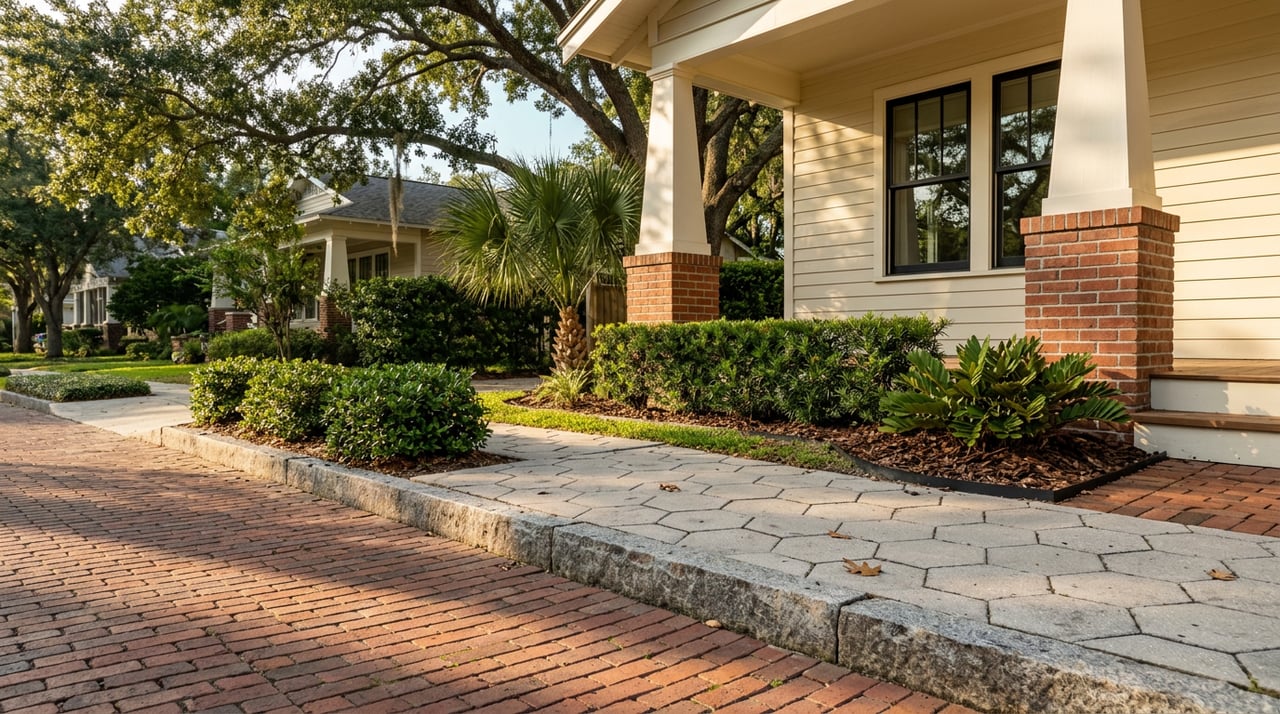
That long development window is part of the story, but the setting matters just as much. The district keeps much of its original rectangular street grid and alleys, and many streets still feature brick paving, hexagonal block sidewalks, and granite curbing. Add in the mature tree canopy, and you get a neighborhood where the architecture feels connected from block to block.
If you picture a classic Old Northeast home, there is a good chance you are picturing a Craftsman bungalow. These homes are among the most defining house types in the district, and they are easy to recognize once you know what to look for.
Craftsman bungalows are usually one or two stories with low-pitched gabled roofs. They often have wide eaves, exposed rafters, decorative knee braces, and tapered square porch columns. Exterior materials commonly include weatherboard, shingles, or stucco.
From the street, these homes tend to feel low, grounded, and porch-forward. Much of their character comes from the relationship between the roofline and the front porch, which is why details like rafters, columns, and trim can have such a strong visual impact.
Craftsman homes often feel welcoming before you even step inside. The porches create a strong connection to the street, and the handcrafted details give them warmth and personality. In Historic Old Northeast, that look fits naturally with the leafy canopy and walkable block pattern.
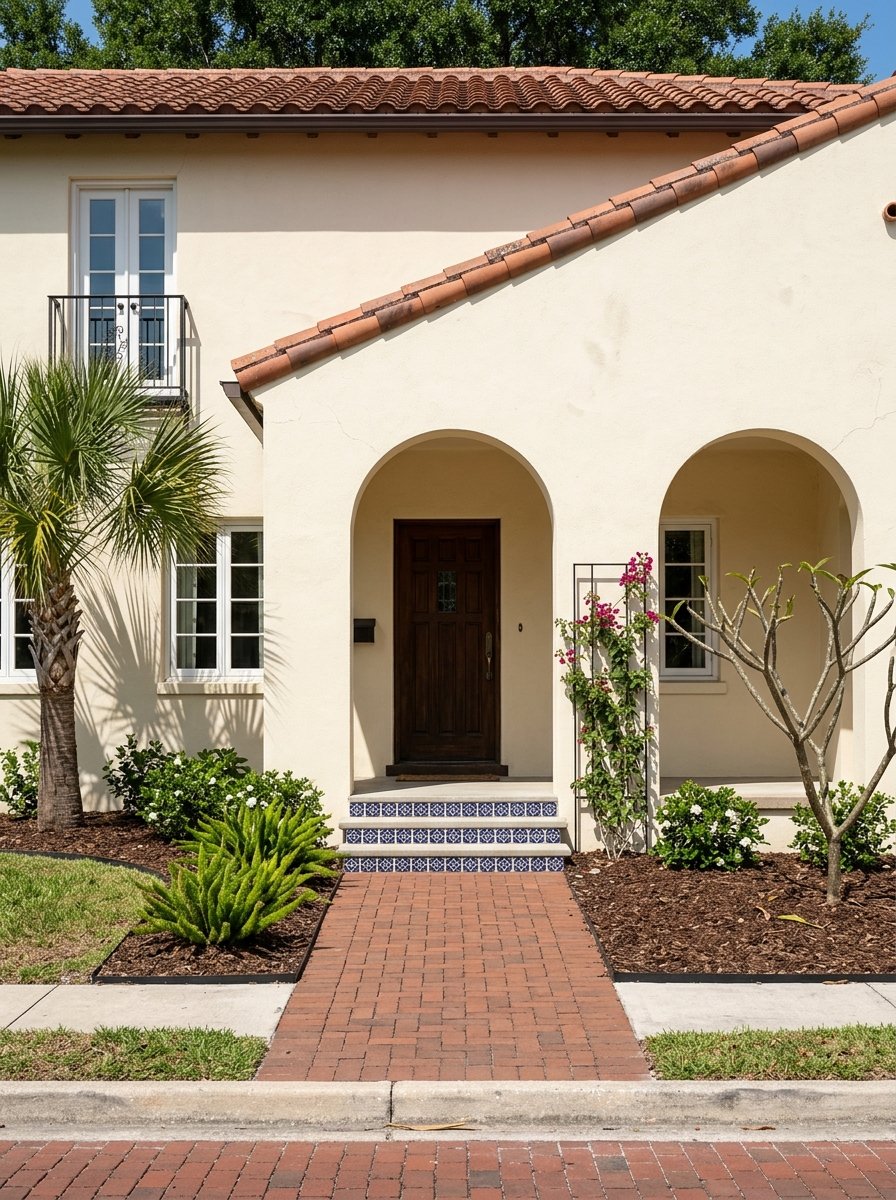
Mediterranean Revival is one of the styles most closely tied to the 1920s Land Boom, and in Old Northeast it delivers some of the neighborhood’s most dramatic curb appeal. If a home feels a little more romantic or resort-like, this may be the reason.
These homes are typically defined by stucco walls, low-pitched red clay barrel-tile roofs, arched doors and windows, balconies, and cast-stone details. Those features create texture, depth, and a sense of movement across the facade.
In and around the neighborhood, the Vinoy Park Hotel and the Pace Residence are often pointed to as notable examples. Even when a home is smaller in scale, the same style cues can still stand out clearly from the sidewalk.
Mediterranean Revival tends to deliver the most distinctly Florida look in the district. Arches, stucco, tile roofing, and decorative masonry do a lot of the work, so those visible exterior elements play a major role in preserving the home’s historic character.
Not every home in Historic Old Northeast feels casual or cottage-like. Some feel more formal, centered, and traditional, and that is often where Colonial Revival and related classical styles come in.
Colonial Revival homes in the district commonly feature symmetrical plans, side-gabled roofs, pedimented entries, transoms, fanlights, sidelights, and small entrance porches supported by classical columns. The district also includes Dutch Colonial Revival homes with gambrel roofs, along with related Georgian and Classical Revival forms.
These homes usually read as more ordered from the street. Their symmetry and centered entries create a balanced appearance that feels very different from the looser, porch-led look of a bungalow.
Because these homes were built in an earlier era, they often feel more room-by-room and formally organized than newer construction. That can be especially true in Colonial Revival and vernacular homes, where the plan tends to follow a more traditional arrangement.
While standout styles get a lot of attention, vernacular homes are a major part of what defines the district. In fact, Frame Vernacular is described as the predominant house style in the neighborhood.
Frame Vernacular homes are generally rectangular and were built by local builders using readily available materials. Common features include horizontal weatherboard siding, overhanging eaves, dormers, exposed rafter tails, and slat porch balusters.
Masonry Vernacular homes are also simple in form and are usually one to two stories. They were commonly built of brick, hollow tile, or concrete block and often finished in stucco with little ornament.
These homes may not always feel as showy as Mediterranean Revival or as instantly recognizable as Craftsman, but they are essential to the district’s identity. They reflect how the neighborhood grew over time and help explain why Old Northeast feels authentic rather than overly uniform.
Historic Old Northeast is not a one-style neighborhood. The district also includes Prairie, Minimal Traditional, Tudor Revival, Ranch, Art Moderne, Monterey, and other later 20th-century forms.
That variety matters because it shows the neighborhood continued to evolve beyond the 1920s. So if you see a later Ranch or another midcentury form, it is still part of the broader architectural story of the district.
In Historic Old Northeast, curb appeal is about more than the front facade. The streetscape itself plays a major role, from brick roads and granite curbs to sidewalks, alleys, and mature trees.
The National Register materials also note that many garages and garage apartments were designed to complement the main buildings. As a result, the overall look of a property often depends on how all the pieces work together rather than on size alone.
If you are trying to understand a home quickly, focus on these visual cues:
Those elements often tell you more about the home’s style than square footage ever could.
If you are considering changes to a home in Historic Old Northeast, it is important to understand that exterior work may be reviewed by the City through the Certificate of Appropriateness process. HONNA notes that exterior alterations beyond routine maintenance are reviewed and approved by the City, while interior changes are generally not reviewed unless they are part of the ad valorem tax-relief program.
The city code also states that certain work in the historic overlay cannot move forward without first obtaining a COA. The city’s permit-exemption guidance also warns that structures in locally or nationally designated historic districts may not be exempt from permit requirements.
For many buyers, the best renovation mindset is preservation and compatibility rather than wholesale transformation. Visible exterior elements like porches, roof forms, windows, masonry, and siding often matter most to the historic character of the house.
That does not mean a home cannot evolve. It means changes should be approached with a clear understanding of what defines the property’s look and what may require review.
Some parts of Old Northeast can feel especially intact, and there is a reason for that. HONNA notes that the area includes 10 local landmarks, Granada Terrace as a Local Historic District, and smaller one-block historic districts such as the 200 Block of 10th Avenue NE, the 700 Block of 18th Avenue NE, and Welch’s Mediterranean Row.
That added context helps explain why one block may feel more tightly preserved than another. If you are buying or selling in the neighborhood, those distinctions can shape both expectations and planning.
Historic Old Northeast rewards a closer look. Once you know how to spot Craftsman porches, Mediterranean arches, Colonial symmetry, and the simple forms of vernacular homes, the neighborhood starts to read like a story told house by house. If you want help understanding how a property fits into that story, or you are preparing to buy or sell in St. Petersburg, Madison Wells can help you navigate the details with clear, local guidance.
Stay up to date on the latest real estate trends.